More upwind sailing, and against the current. Uncomfortable, but it would be churlish to complain. Only 20 miles.
Dominica, when we arrived at Portsmouth on it's NorthWest shore, was completely different from what we had seen so far. Steep sided, with rainclouds on the peaks and what appeared to be just a few shacks, rather than any large scale development. We did see a few buildings and a petrol station later.
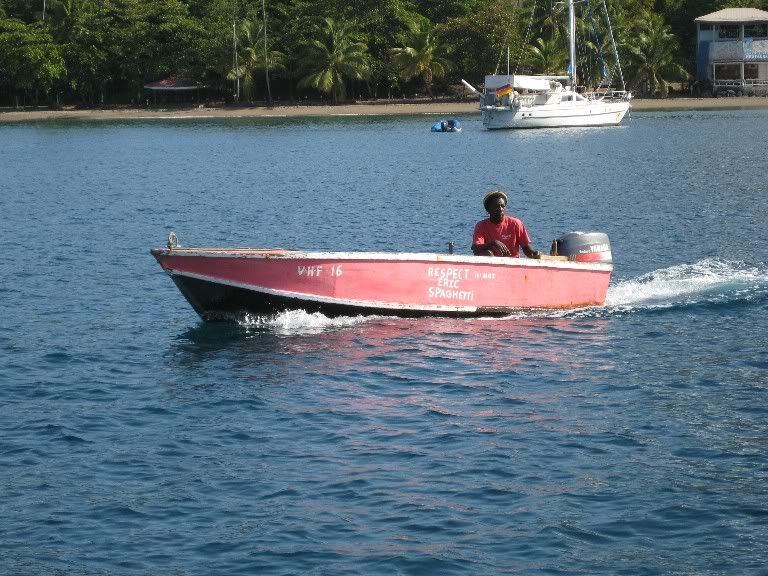
This was also the first appearance of the boat boys, which seemed more prevalent as we moved Southwards. These fellows shoot about the bay in wooden boats, with Yamaha Enduro outboards, offering to show you where to anchor, sell you flags, food or water, run tours for you, guard your boat when you are ashore and many other services,
This was Eric Spaghetti, my favourite name, ever, I think. The pilot guide had warned that some of these guys could be rude or threatening, and some would try and steal. This was not our experience at all, they were curteous and good natured. We anchored, Portsmouth being a good anchorage, shallow and sandy, and headed ashore to a bar, Big Papa's, for a beer and to watch the sunset.
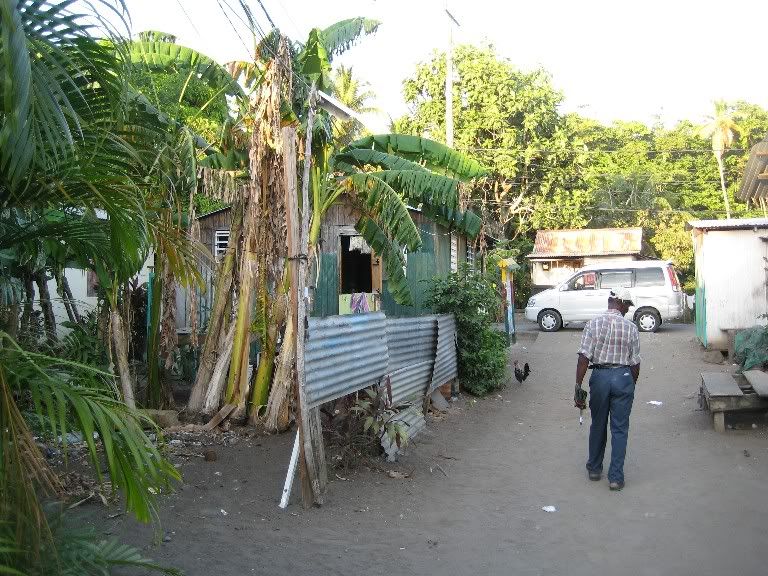
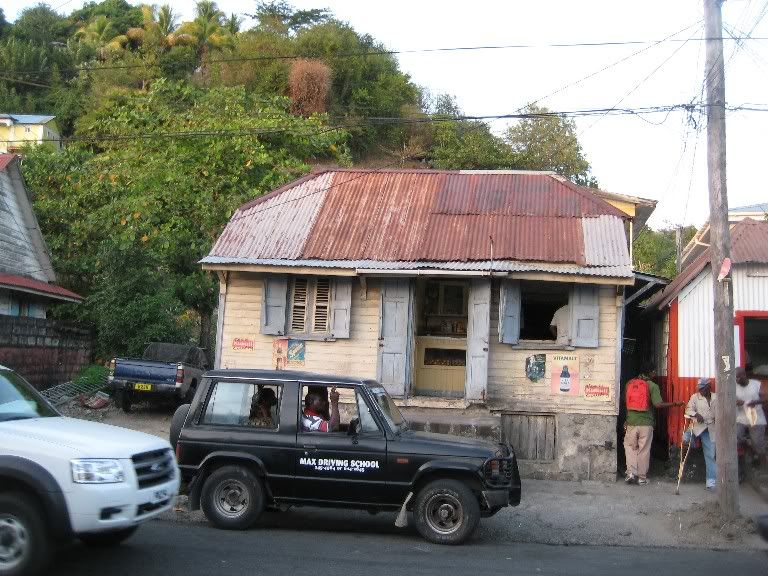
The street behind this beach bar showed a bit more of the true nature of Dominica, as far as I could tell.
We returned to the boat. Vegetable chilli with rice and Fajitas.
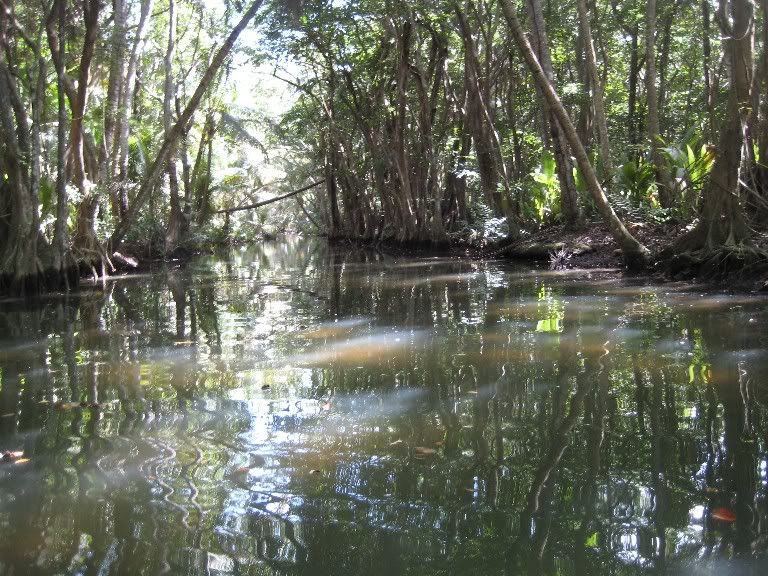
The following morning we had decided to take a trip up 'Indian River', a bit of a tourist attraction, and used in the film Pirates of the Caribbean, Dead men's chest'. $EC 40 each, about £9. No outboards allowed so Eric rowed us through the tangled roots of the mangroves, fish and wading birds all around. No other life though, Eric explained how they'd shot many of the monkeys as they stole bananas. Who'd have thought it, eh?
[caption id="" align="alignnone" width="300" caption="Indian River "][/caption]
At the furthest navigable point up the river, we stopped for a walk in the rainforest and refreshments at a small bar. Grapefruit crush sounded nice, although a later stomach upset left me wondering whether the water came directly from the river.We quickly upped anchor on return to Cafe Seerose and sailed South for the Capital, Roseau. The anchorage was poor, 20m of water close in to the shore, and 200m a mile or so off. First time we anchored with a Stern line ashore, but dragged, so we abandoned tht stern line and managed to hold.
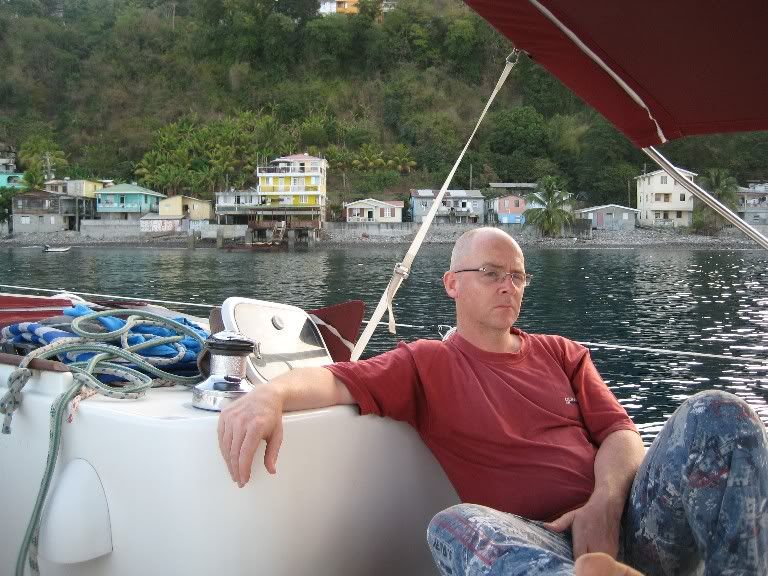
[caption id="" align="alignnone" width="300" caption="Will the anchor drag?"][/caption]
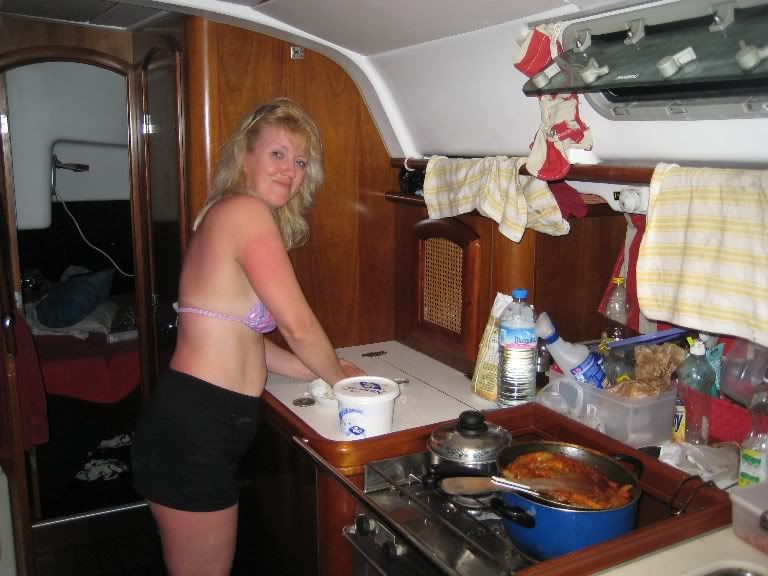
Look happy don't I? We went ashore for food. A single line of concrete shacks led to the main town. We found a shop for provisions, but walking back, in the dark, I was concerned, staring at people drinking in the unlit insides of dwellings that were open to the street. There was nothing to worry about, and we enjoyed a lovely meal at a local restaurant.
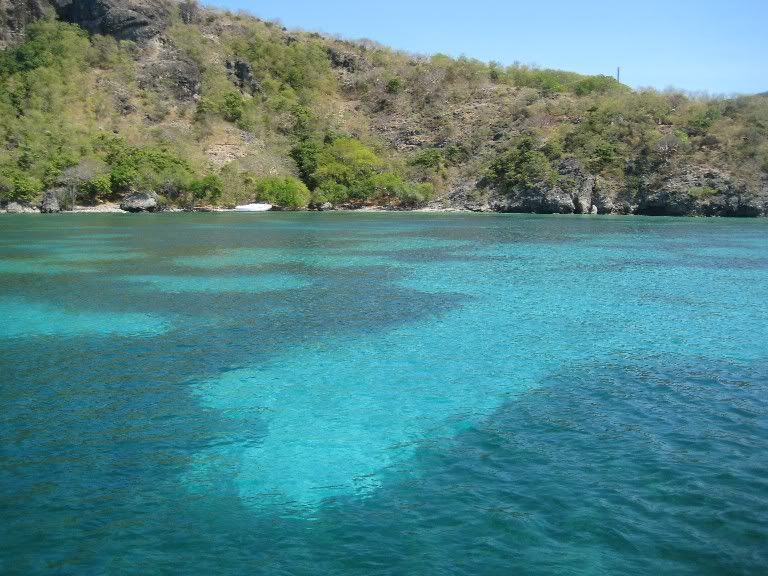
[caption id="" align="alignnone" width="300" caption="Baie de Marigor, Les Saintes, Guadeloupe"][/caption]
The Caribbean drought meant that water was not available on the quay. As we filled with diesel, we topped up the water tanks at the same time. $1 US per gallon, so we would be careful with it. Set out for Guadeloupe at 07:40, wind ESE, Force 2, so we motorsailed. Louise spotted a 'dolphin' off the starboard bow, but the second time it surfaced, we ould see that it was solitary, and was far too large. I'm guessing Minke or Pilot whale.
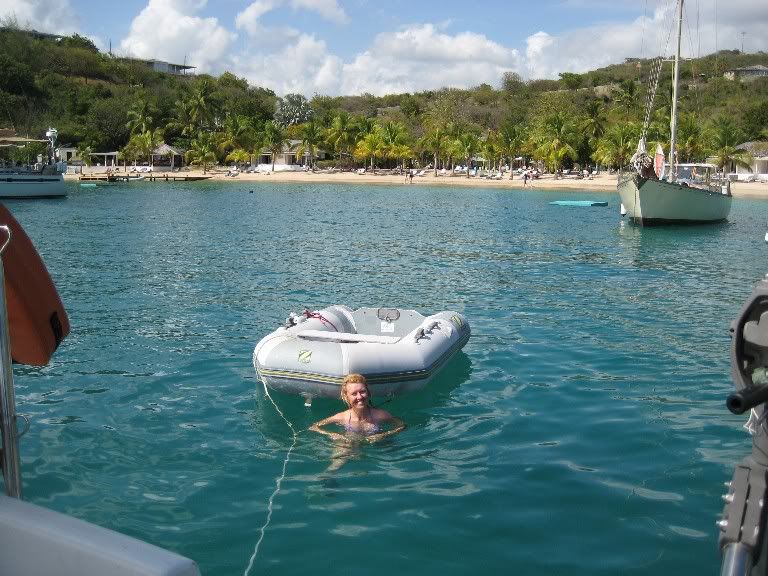
Guadeloupe is, in fact, two islands, Basse Terre and Grande Terre. In between is the Riviere Salee, a saltwater 'canal' which joins the sea to the North and South of the Islands. To get to the North end of the riviere, one has to navigate a buoyed channel (IALA 'B') through the coral. We could not resist the chance of a quick swim and snorkel.
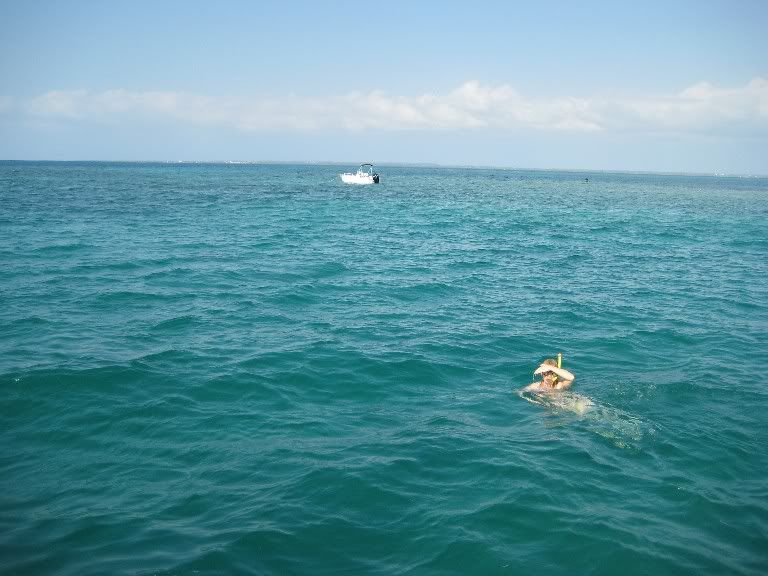
[caption id="" align="alignnone" width="300" caption="Snorkelling, Grand cul de sac de Marin"][/caption]
Not a great photo, but you can see the reef, marked by the light coloured water just above the moored boat in the picture and running left to right. This is why it is not recommended to navigate channels through coral reefs at night. As we later found, not all of the buoys in the channel were lit.
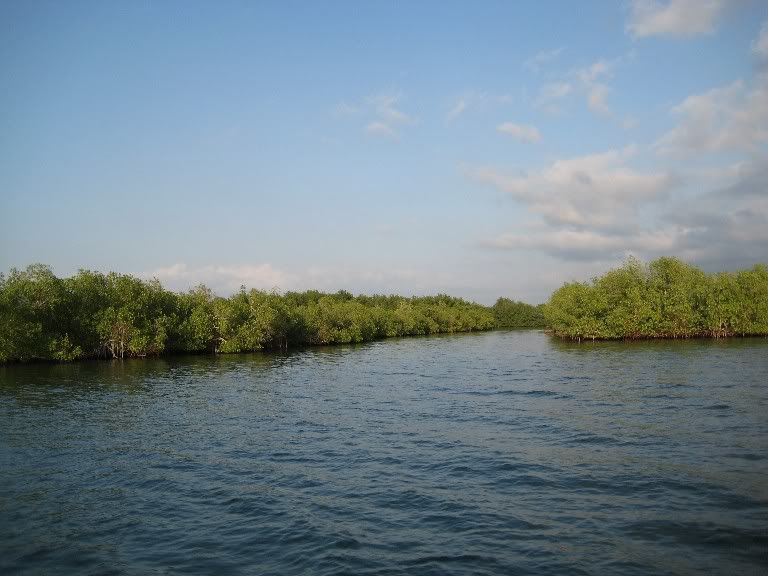
The entrance to the Riviere Salee itself was a mangrove swamp, and with 2m of water maximum, we were concerned. No problem though, and we were soon in a narrow channel. surrounded by mangroves.
[caption id="" align="alignnone" width="300" caption="Can you hear the Mozzies.....?"][/caption]
A swing bridge controls entry at either end of the Riviere. The bridges open once per day at 04:30, so we anchored just near the bridge to wait. The mosquitoes were well versed in finding sailors.
The bridges opened on time and we navigated the canal with ease, anchoring again just after 05:00 for a couple of hours sleep.
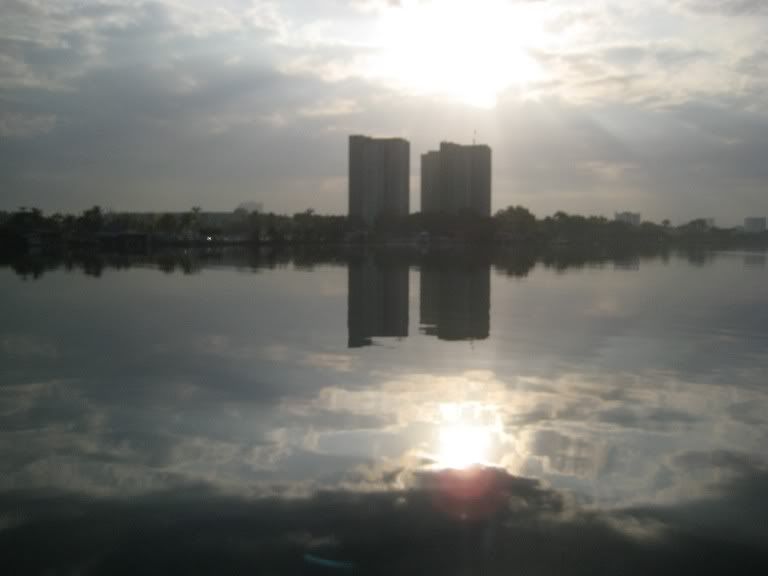
We did not go ashore on Guadeloupe, but the town, Pointe a Pitre, did not look inviting, although there was a marina for fuel and water.
[caption id="" align="alignnone" width="300" caption="Pointe a Pitre"][/caption]
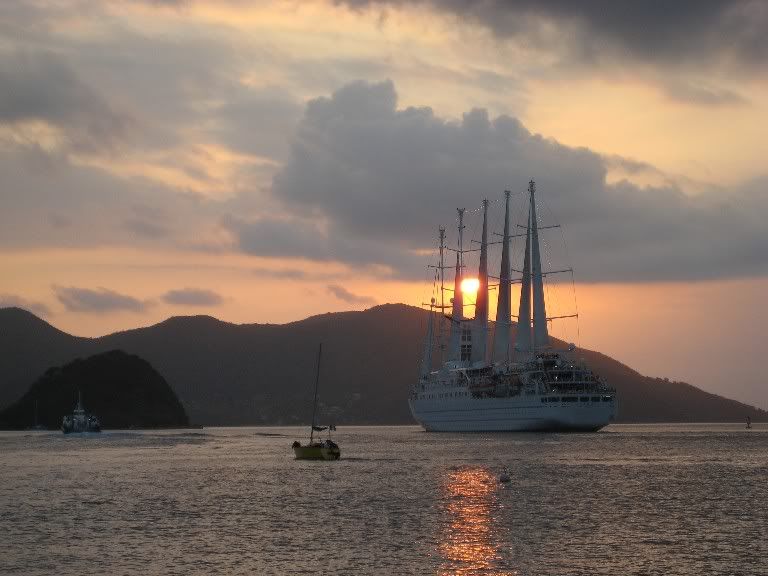
More reefs and buoyed channels as we left the Southern end of the Riviere Salee and headed south, 20 miles or so, towards the Guadeloupe dependency, Les Saintes. A stop for a swim on the way and we arrived at Terre de Haute just as a cruise ship was leaving, complete with sails.
[caption id="" align="alignnone" width="300" caption="Cruise Ship, Les Saintes"][/caption]
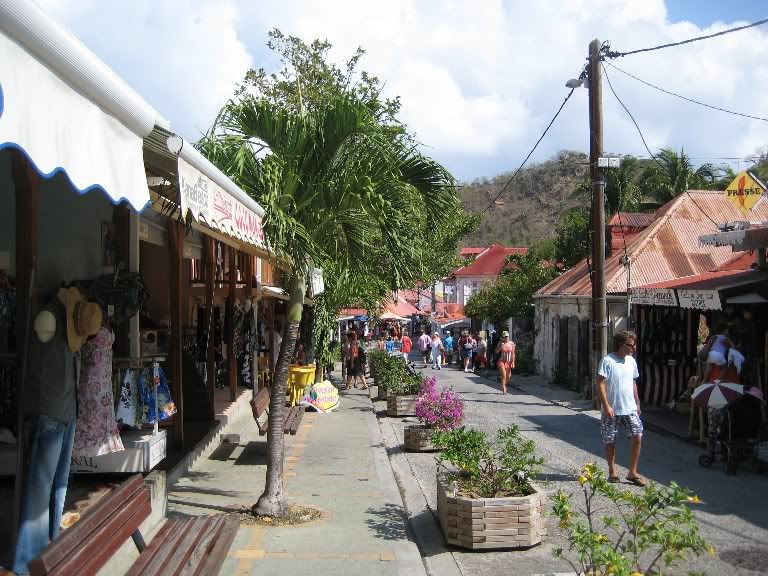
It was Louise's 40th Birthday, so we went ashore for a few beers in this charming French town. Ah, no dollars, and no Eastern Caribbean dollar, Euros only. We found a nice looking restaurant, Le Cafe Insolente. Yes it was. Food was OK, my Octopus Bourginoin was too strong a flavour for the fish, but we enjoyed.
The following morning we had eggs, cheese, French bread and good coffee and juice for breakfast.
[caption id="" align="alignnone" width="300" caption="South of France?"][/caption]
The supermarket was well stocked, although the fresh veg was very poor. The eruption at Monserrat had dusted many crops with volcanic ash, and the drought had not helped matters. The French bakery almost made up for that.
[caption id="" align="alignnone" width="300" caption="Baie de Marigot"][/caption]
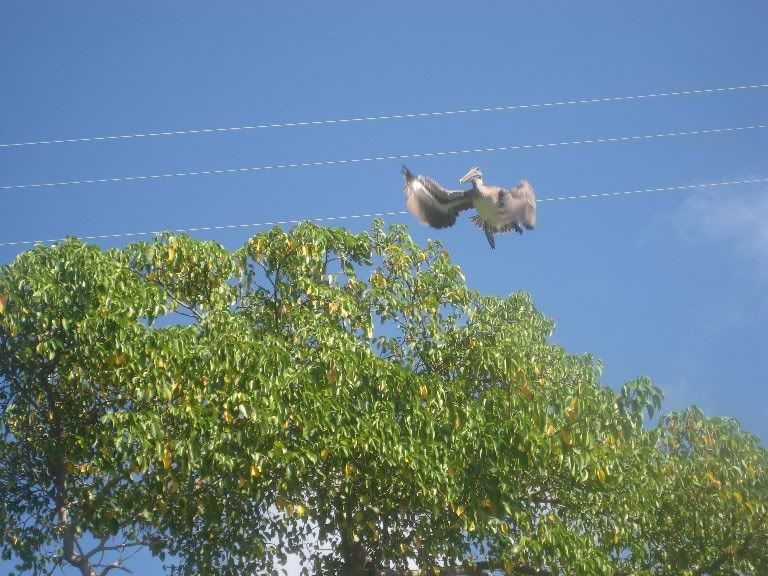
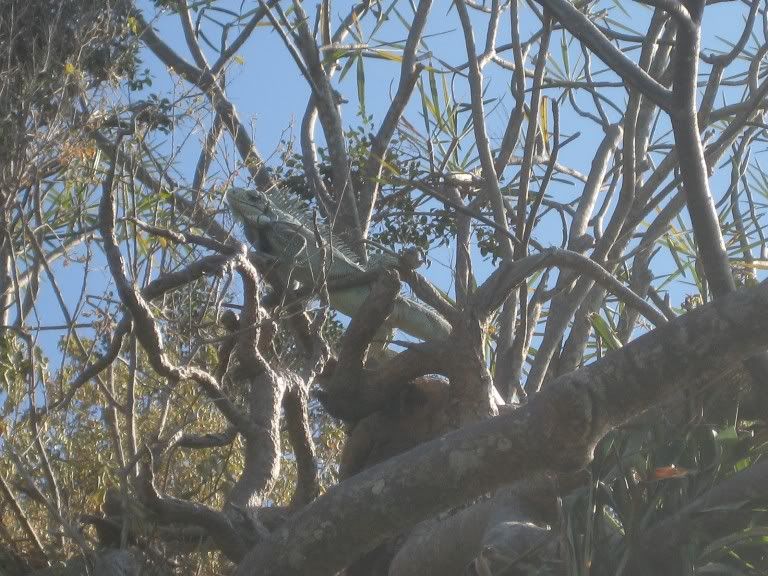
Back to the boat and a 2 mile hop around the corner to Baie de Marigot, where we anchored with two other boats. Just 1km from the town, but we saw Pelicans and iguanas, and, under water, morays, puffer fish and barracuda.
[caption id="" align="alignnone" width="300" caption="Pelican, landing, er, gracefully."][/caption]
A walk into town for an evening beer was followed by fish curry back on the boat. I made Louise an Aubergine curry and she made Chapattis, a favourite on Ishtar, and all was enjoyed.
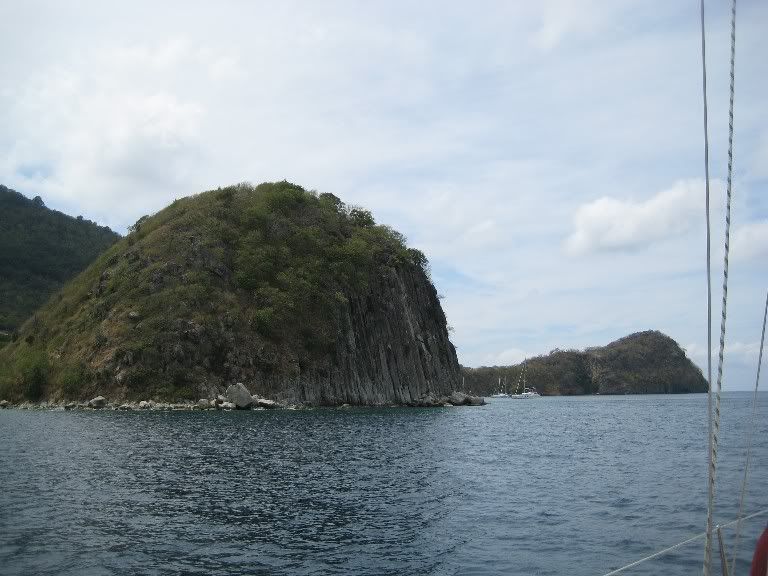
A leisurely start the following morning as we sailed back around to the town, passing Hexagonal bassalts, evidence of the Caribbean's volcanic history, heading South again, towards our next Island, Dominica.
We had a chance for a couple of weeks sailing in the Caribbean, courtesy of a friend and his 40ft Beneteau Oceanis which he sailed there from Greece before Christmas. We'd sailed with Mark in the Ionian last summer, and couldn't wait for a chance to see more of the Caribbean, having only been to the Cayman Islands to date.
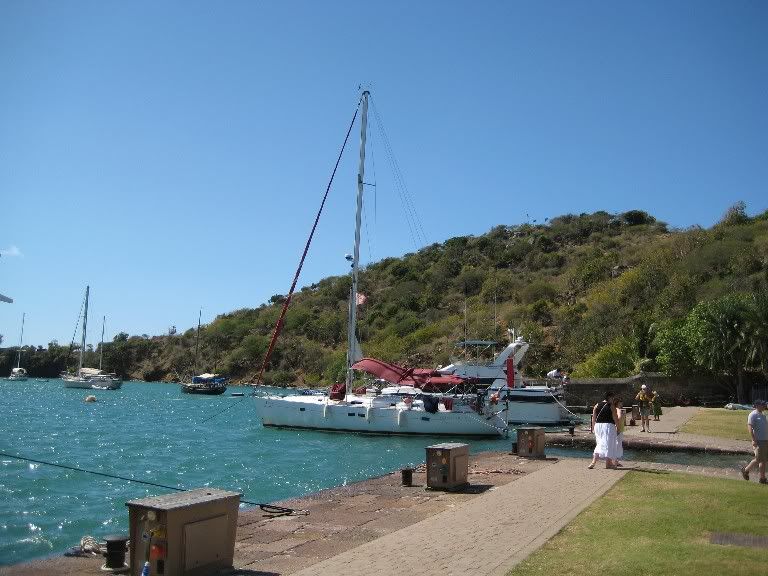
Flew out on BA from Gatwick, leaving behind the last of the cold weather, news reports still talking of snow. Flight delayed so arrived in St Johns, Antigua as the sun set. $31 for a taxi ride to Nelson's Quay, on the South coast, where we met up with Mark, Emma and the boat, Cafe Seerose. She was moored against the old quay, part of an up market marina complex restored in the 1950s-1970s, over 150 years after Nelson was stationed here.
[caption id="" align="alignnone" width="300" caption="Cafe Seerose at Nelson's Quay"][/caption]
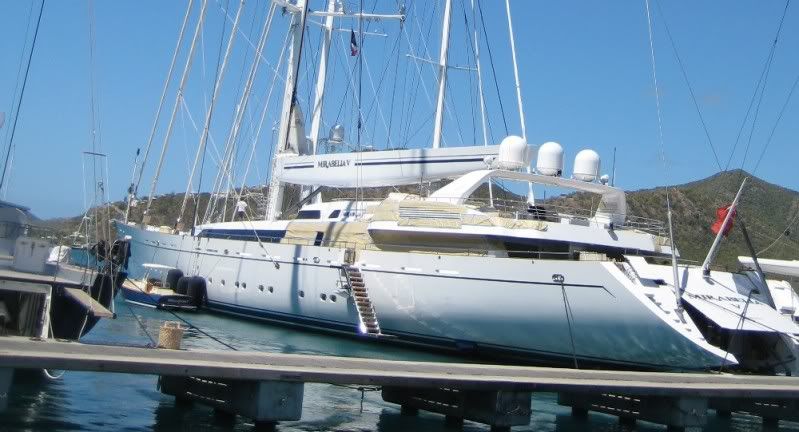
We walked a short distance to a supermarket near Antigua Yacht Club to stock up for our trip. I'd never seen boats as large and luxurious. Each yacht waited, in perfect order, for its next charter, piles of crew shoes on the pontoon nearby.
[caption id="" align="alignnone" width="300" caption="Mirabella V, the largest single masted yacht in the world"][/caption]
Still tired, and nowhere near used to the heat, we decided to go for a sail. We left the dock and headed out Westwards, ominous smoke billowing upwards from Monserrat. We didn't know it at the time, but a recent eruption, combined with drought in the Caribbean had ensured that fresh fruit and veg would be in poor supply.
Mark explained the 0.5-1kt current that flows from South to North and the fairly consistent SE winds. A beam reach in a SE force 5 with swells, on top of the travelling and the heat made Louise feel a bit seasick. For me, it was great to be sailing in the Caribbean. An hour later and we headed back to Nelson's, stopping for a swim on the way. Water Temperature 27.8C
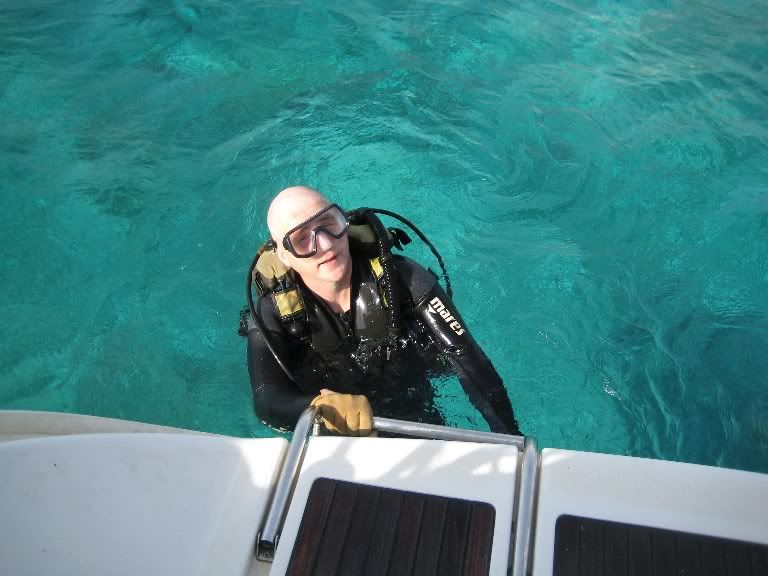
A longer trip the following day, Westwards along the South edge of Antigua for a couple of dives off Cades reef. Shallow, and not overly exciting, but nice to be diving in warm water.
We caught a yellow tailed snapper on the way back, so anchored in Falmouth and lit a hasty barbeque. Excellent fish. We discussed an early start, and a sail Southwards in the morning, heading for Guadeloupe.
Beautiful sunny day. Crisp clear air, with a cold Easterly blowing from the NorthEast. The promise of rugby in the club bar to follow, with beer and warmth.
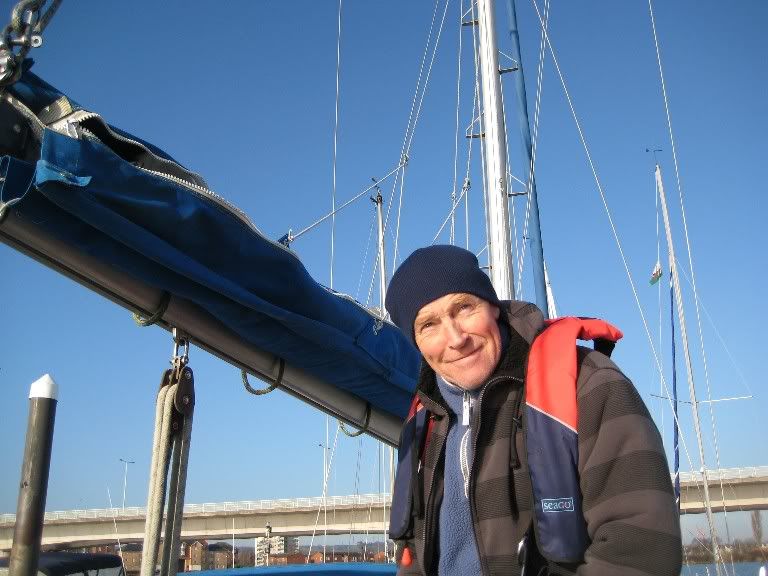
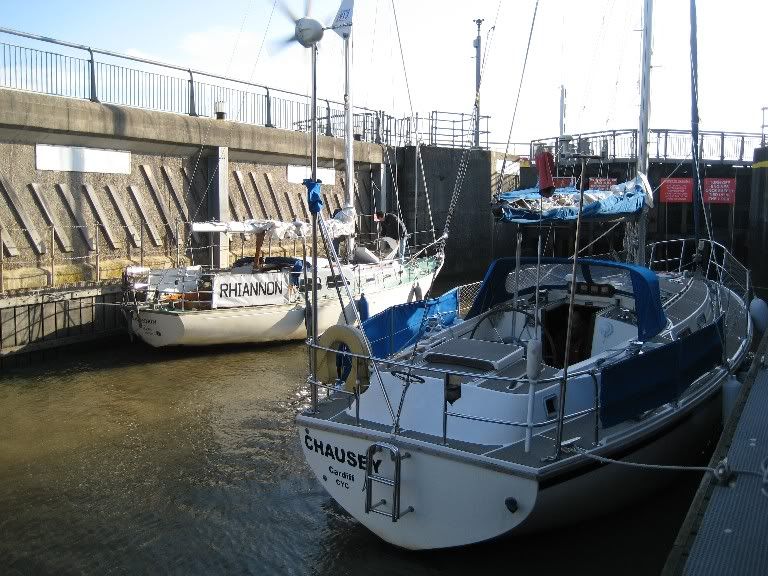
Vince and I joined Allan. aboard his beautiful Westerly 33, Chausey. Thermals on, kettle on, we left the pontoon and headed for the barrage. It just lifts you to be sailing, even as we crossed the bay, the smiles started.
We locked out with another club boat, Rhiannon, whose captain and crew also seemed buoyed by the great winter sun.
We were asked to avoid the dredger working in the outer harbour. She was tightly squeezed in, and we saw her later, heading out into the channel to dispose of the ever present Cardiff mud.
as soon as we passed the Outer Wrach buoy we raised sail and headed NorthEast. Chausey eased over and was soon zipping through the water with the remains of the flood. We chatted and laughed.
From a boat out in the channel, you cam look across at Cardiff. A beautiful city with a recognisable skyline. Rather be out here though, than packed into the shops.
We had planned to head towards Newport, but were enjoying ourselves so much that we went South of the Welsh grounds and headed across towards teh English grounds. I helmed, Chausey easily controlled by her wheel in the flat sea. We felt the tide turn and knew we would need to head back soon if we were to avoid low water at the barrage.
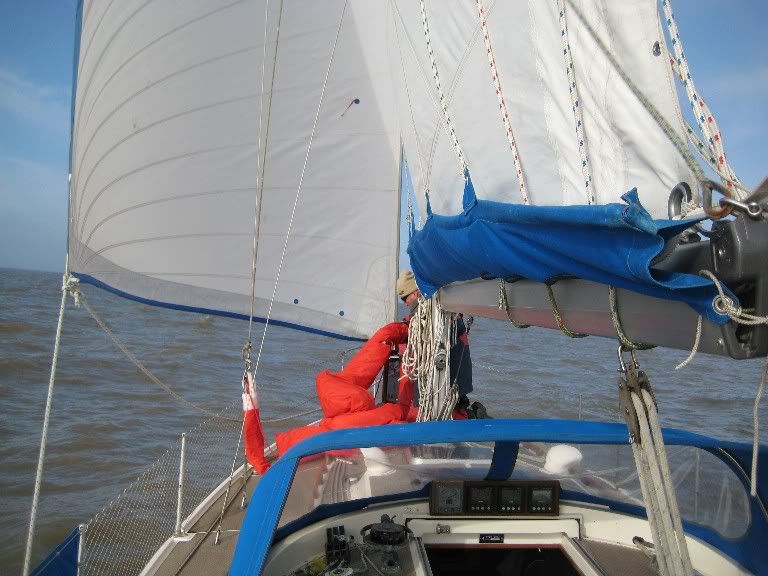
Light winds, so Allan readied the crusing chute.
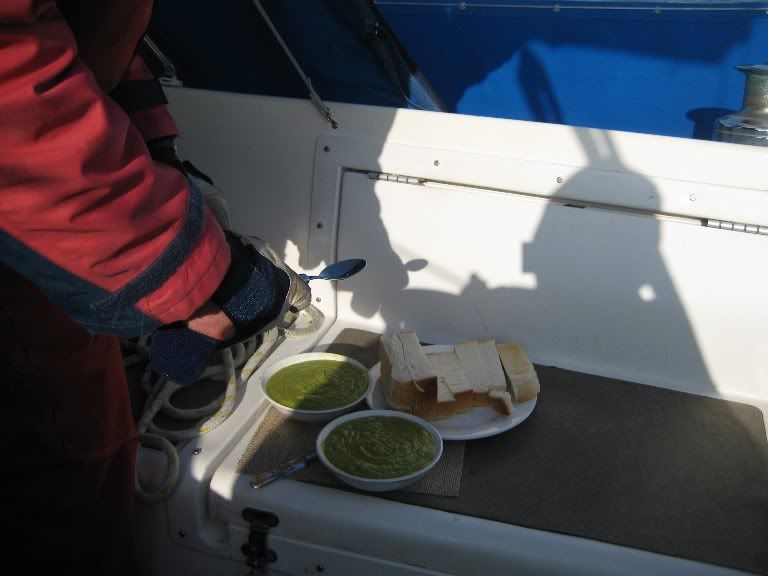
The wind dying all the while it was good that the tide ebbed out of the channel, draing us back towards Cardiff. The dredger left the harbour as Allan served up some delicious warming pea soup:
All too soon we were back at the barrage and, not long after, tied up on the pontoon. Into the bar for some well earned beer.
The crew mix was spot on - we all got on together really well. Plenty of humour, but enough knowledge and experience to make decision making easy. Huw had done his homework, and the tides, chartwork, pilotage and navigation went without a hitch.
The weather was kind. No strong winds or rough seas, yes it was cold, but the right clothing combined with short watches and plenty of hot drinks made that a doddle.
Teething problems. The paddle wheel log failed, and so did the echo sounder. The Eberspacher heater didn't work initially, but Huw had a fiddle and it pumped lovely hot air for the rest of the trip. These things are to be expected. Even the most well found boat has such issues, and a newly purchased boat, more so. We expected teething problems, and they were not an issue.
Bearing in mind the time of year, I'd say we sailed defensively. We didn't push it, stayed outside the islands in the dark, stopped briefly to check fuel and oil. We really didn't want problems caused by our own mistakes, and we didn't cause any.
And lastly, I think it is something that will stay with all of us for a long time. My particular highlights were the Menai straits and crossing Cardigan bay in the dark, starlit, with Strumble head lighthouse creeping closer on the port bow.
Ok, not Ishtar, but a similar boat. Camelot is a Colvic Countess 28ft, although a little more in the beam than Ishtar, and a Bilge keeler. Huw, a friend from the club had bought her in Bangor, and wanted to sail her back from there to Cardiff. In January. In one of the coldest winters for years. Non stop.
And didn't we all enjoy it!
Five of us set off to do the trip, all of us nearer 'Last of the Summer Wine' than 'Five go mad in Bangor' although we promised to try. Huw, Allan and Steve went up by car on Wednesday night, readied the boat and launched her.
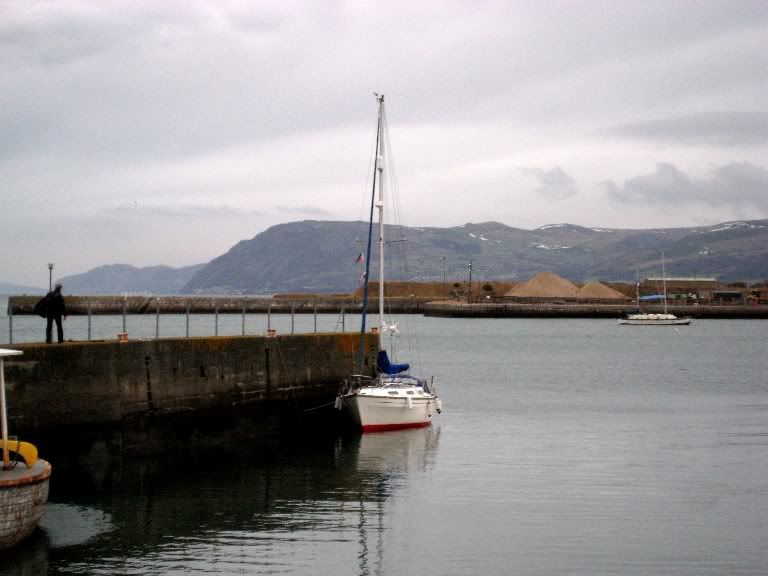
Vince and myself took a train from Cardiff on Thursday, up through the melting snows and sodden ground of mid Wales arriving in a cold overcast Bangor at 16:00. We quickly found Camelot moored against the harbour wall. This was great. It meant that our return from the ale house later would be far simpler. We had anticipated a row out to a mooring.
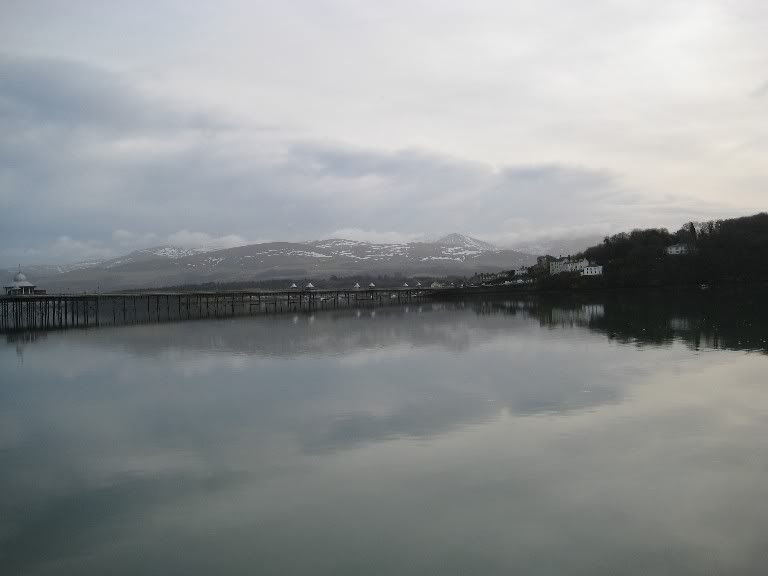
The remains of the recent snows on the North Wales hills, reflected in the cold waters gave it a Scandinavian feel. We walked to the boat where the other lads were waiting for Camelot to settle in the mud before we could go ashore. They seemed to feel that the arrival of Vince and myself increased the noise level substantially. No idea why.......
The boat settled and we did some final calculations. It was important to be away as soon as she floated the following day, in order to make passage through the Menai Straits and out along the Lleyn Peninsula before the tide dropped too far. From there we would cross Cardigan bay at night, traverse the Pembrokeshire islands on Saturday, and then on crossing Carmarthan bay, passing the Gower and up along the Glamorganshire Heritage coast, arriving in Cardiff on Sunday afternoon. That was the plan, at least.
For now, there was little to do. We wandered into Bangor and found a pub that suited us. Old and worn, with real ale and good food. 5:45pm. This was going to be a long one.
After dismantling a giant yorkshire pudding, with sausages, gravy, carrots, peas and chips, and sampling 2 of teh 5 real ales on offer, the Open Microphone night began. I was expecting karaoke, but the flautist, young lady singing the blues in her first ever live performance, and R&B guitar player at the end were very good indeed, as were the remaining three of the 5 real ales on offer.....
I suspect the harbour wall was shaking that night, such was the volume of the snoring aboard Camelot. Half a gale blew, but it was cold, calm and clear by dawn.
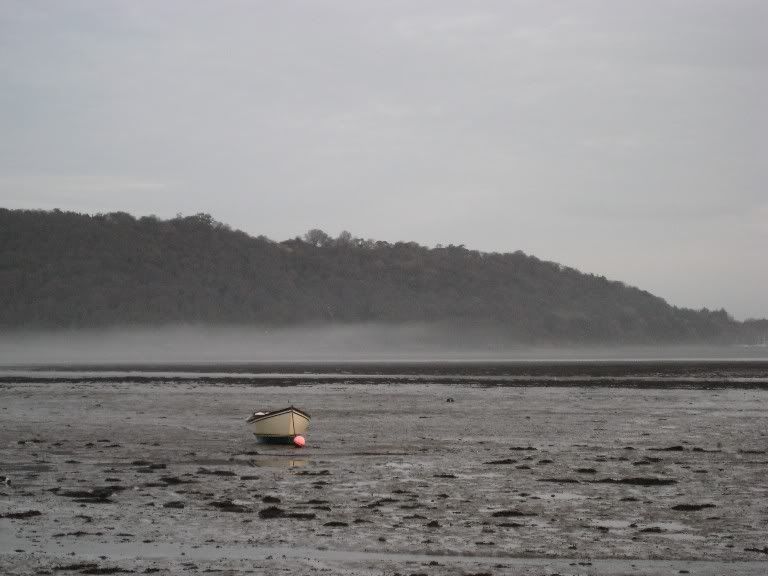
The tidal range was only about 5m, but with the bay being so flat, the tide seemed miles out. Clounds of Oystercatchers screeched, wheeling against the snowy background. We were hoping to leave around 12:00, so killed a few hours with a cooked breakfsat at a local cafe and a trip to the supermarket. Feeling fragile, and expecting rough seas after last night's wind later on, I stuck with black coffee.
The tide crept towards the boat as the morning progressed, and gradually, Camelot began to float.
With inches under the keels, Huw fired up Camelot's inboard diesel and we crept away from the harbour and out into deeper water. It was great to be afloat and a sense of anticipation for the journey ahead filled us all.
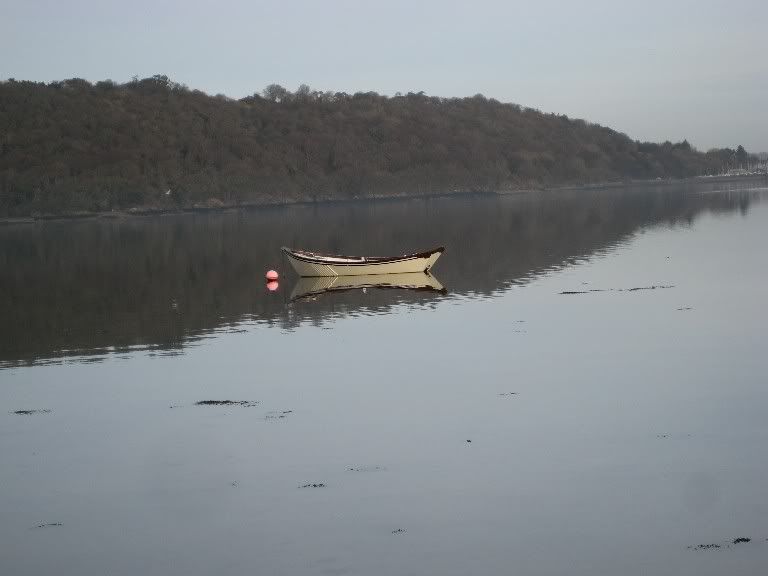
The still waters lapped against Camelot's hull as we motored slowly through the Menai Straits. It was the first time I'd been through, and I was surprised how much wildlife there was to be seen, particularly birds:
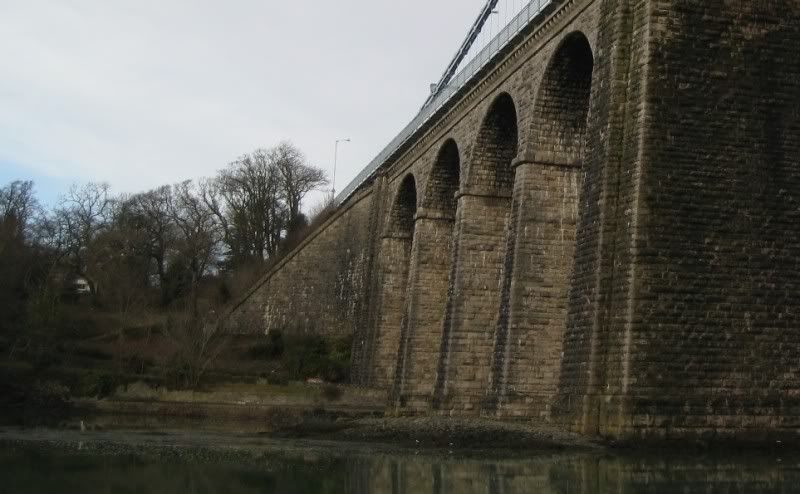
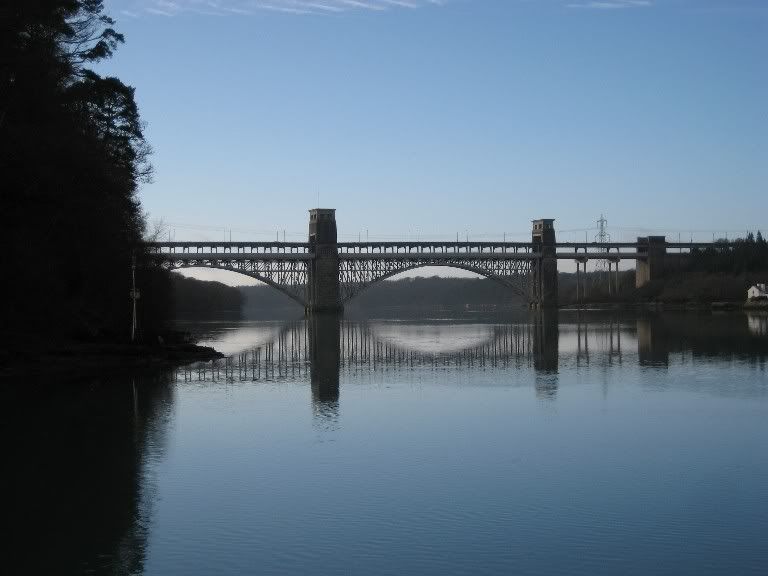
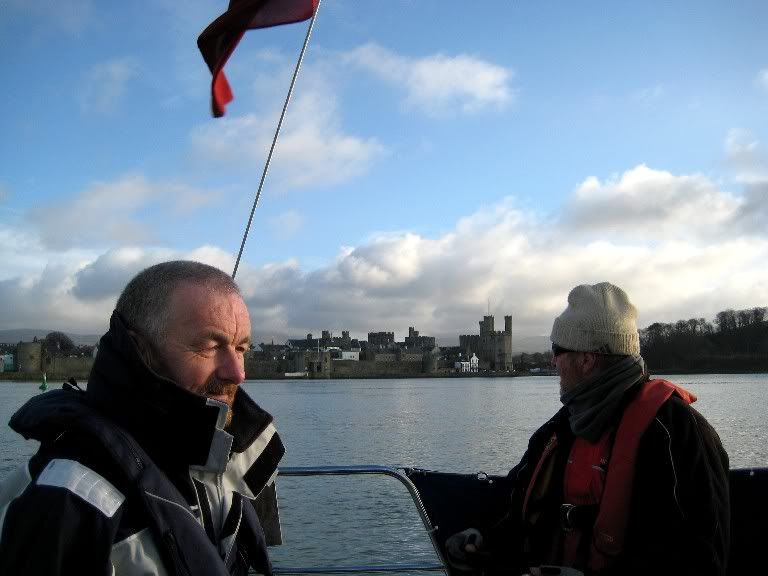
We followed the pilotage instructions and sailed under bridges, past rocky ledges and castles. A beautiful stretch of water, well worth a look.
We sailed on, past Port Dinorwic to Caernarfon - a place I had visited as a child, although I remember little other than the great castle.
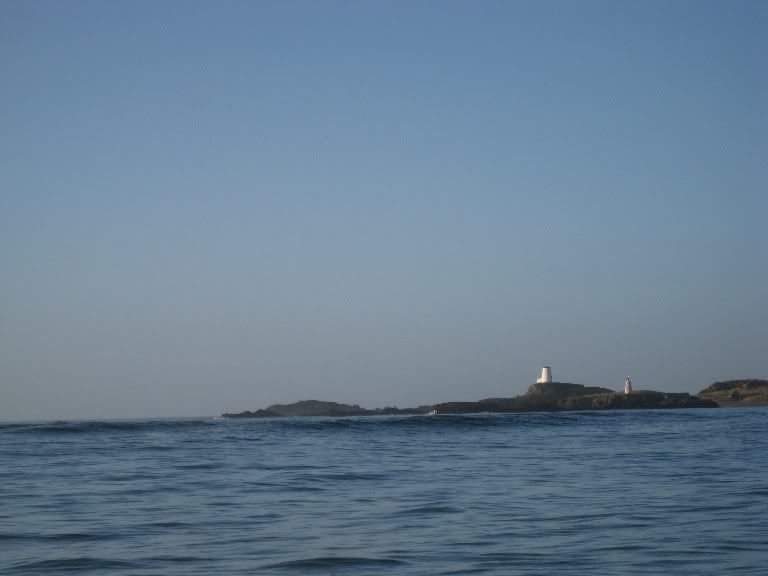
As we motored on past Caernarfon the straits opened, sand below and dunes either side, just like an estuary. Huw referred to the pilot instructions. We followed the narrow channel, from buoy to buoy, the remains of last nights swells lifting and breaking on the sandbanks literally inches below the surface in places. With the echo sounder not playing ball, we relied on the channel markers, and they did not lead us astray. Finally, we passed the last of them, and exited the straits, relieved.
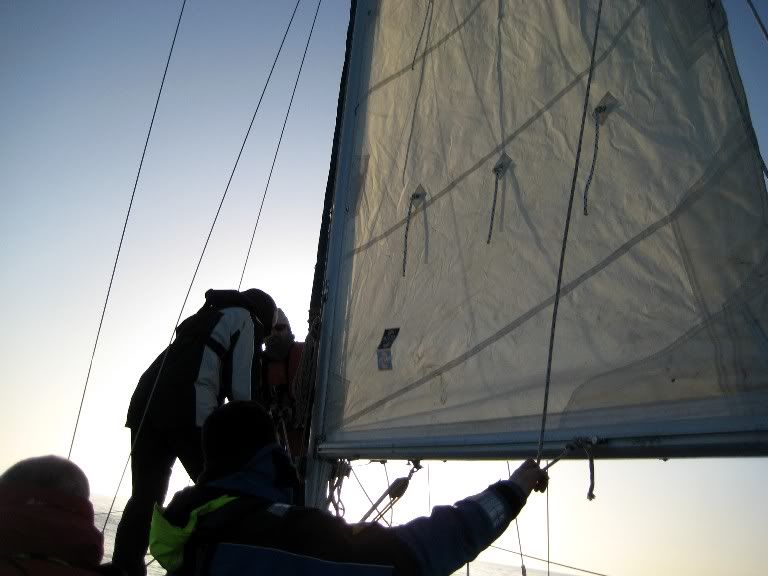
The course to steer was 225T by the GPS. It was late afternoon, the skies cloudless and a pale January sun inched towards the horizon. Huw wanted to ensure the sails were up before dusk, so that nobody would need to be working the deck after dark. We set about our task:
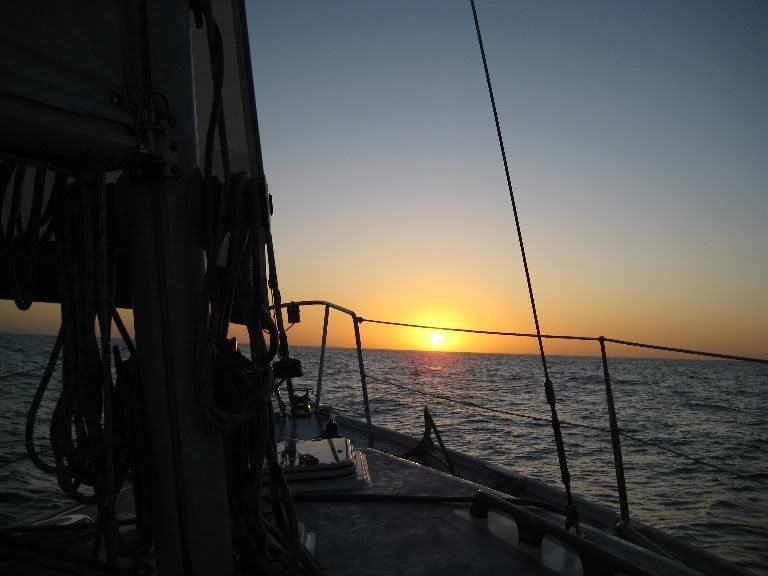
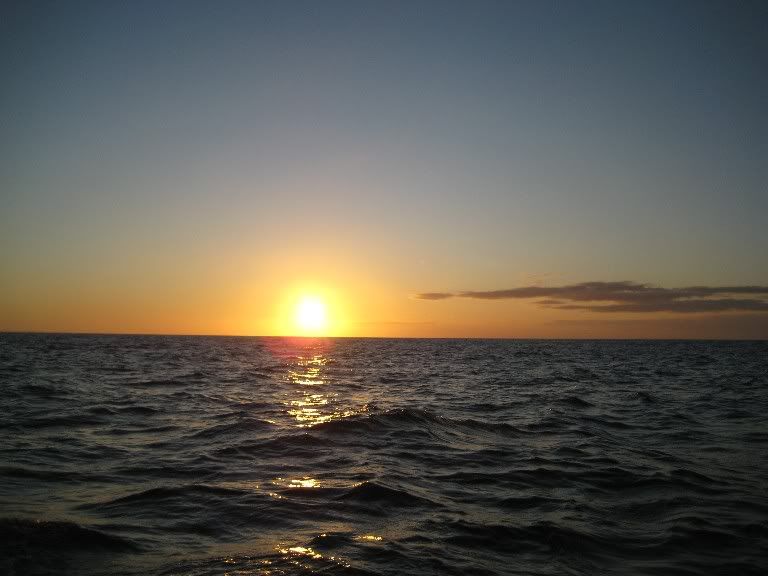
It promised to be a cold frosty night. Wisps of cotton wool cloud wrapped the North Wales mountains, keeping them warm as we steamed Southwestwards towards the setting sun.
We soon picked up the light on Bardsey Island, the end of the Lleyn peninsula, and night fell. The sky was full of stars and a few of us sat on deck discussing how to navigate by them. We quickly realised that. although we could find Polaris with little diffiulty, we had no real idea how to do it, and not enough food on board to try an experiment.
Orion was prominent. I've always loved him. It reminds me of frosty winter nights staring up, usually away from home - there are no stars visible from Bridgend anymore, too much light pollution.
An hour's kip and I awoke to the smell of Friday night curry. Huw had cooked a spicy vegetable curry with mushroom rice. Although delicious, I'd woken with a headache, and didn't finish it. I helped Huw hand it up into the cockpit, hands reaching down from the darkness.
I was helming from 01:00 until 02:00, an exhilarating experience, the boat cutting through the waves in the dark. A light in the South East caught my eye. Flashing 4 times every 15 seconds, the chart said it was Strumble head. That was when we realised how much ground we had covered. A quick chat with Huw and a check on the GPS showed that we would be at the Bishops and Clerks before dawn.
I've dived these islands, their associated stacks and submerged rocks for 20 years. I'd looked forward to sailing through them, but if we did that at night, and I wasn't on watch, it was a much more daunting proposition. We did some further calculations and agreed to run well to the West of the hazards and then cut South just to the West of Skokholm as dawn broke. I finally headed for my bunk at 03:30.
When I woke, 20 minutes late for the start of my next watch, dawn was about to break, and Skokholm was in sight.
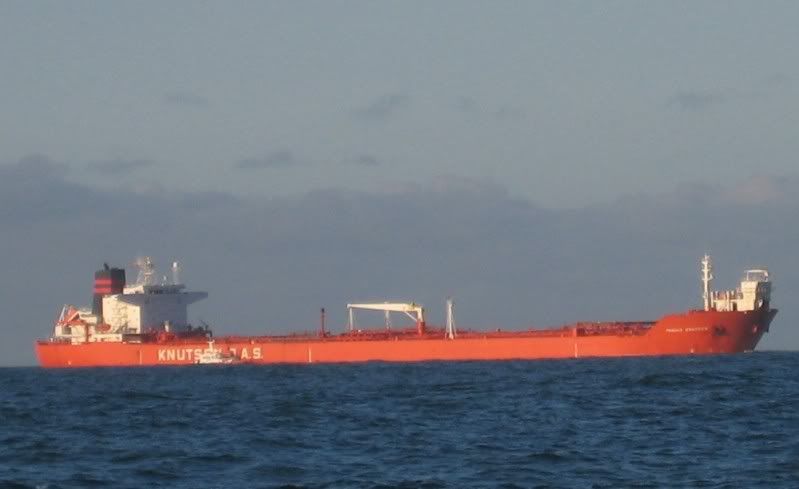
We could see the traffic increase as we neared the busy port of Milford. After leaving the Menai straits, we saw only one or two isolated vessels in the distance all night. Now we could see a number of boats , presumably tankers, toing and froing, smaller boats (pilots) attending them as the new day started.
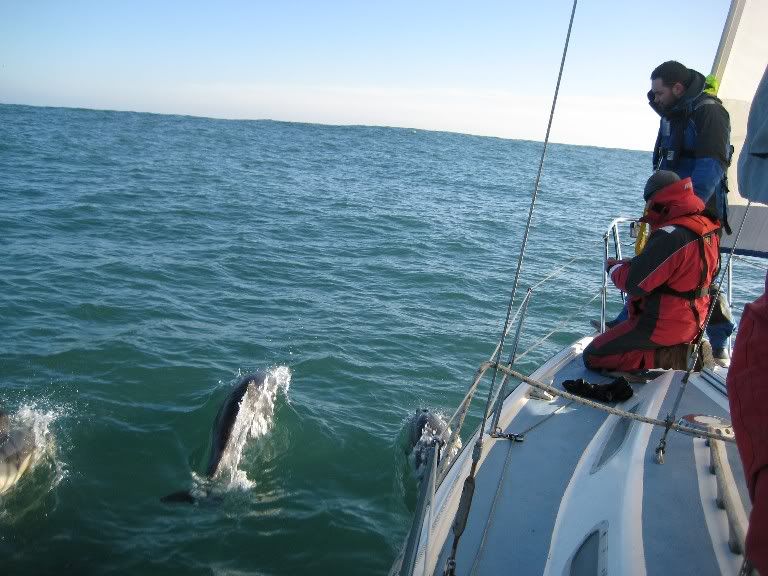
Spirits raised with the new day, and the boat woke up and became busyonce more. Breakfast was served, bacon sarnies all round. Not a big eater in the morning, some toast was the order of the day for me. The sun crept upwards, and it actually felt warm. Spirits were high and again, and again, people said 'I can't believe how lucky we are '.But it got better. I spied a splash of to starboard under the sail. It was quickly followed by another, and I knew dolphins were about to join us. I stayed in the cockpit as the others grabbed cameras and headed for the bows.
In June last year, and again in September, I'd seen a pod of mixed dolphins and porpoise just off the heads at Milford. They were here again, about 20-30 of them. The dolphins, complete with calves, played in the bow wave. The porpoise were more shy, staying slightly further from the boat, but still playing quite clearly, jumping, spinning and generally enjoying themselves.
Things were going so well, one Allan said that it was on;y a matter of time before we spotted a suitcase full of money floating past. Sadly, he was wrong.....
Saturday was a lazy day. The boat was sailing itself, and we clocked up the miles. Fighting the tide off Milford, with the tide past the Gower and up the Glamorgan coast. The scenery became very familiar to all of us, this was our home cruising ground. The day came to a beautiful end as we chugged up the channel:
Darkness fell once more and we could make out the lights at aberthaw and Wenvoe television masts. It seemed milder than last night for the first few hours, but got much colder as we approached Cardiff. A clunk in the darkness sent us rushing for torches and we spent a nervous couple of hours avoiding floating debris, from small twigs to larger logs.
We were soon rounding the Ranie buoy and entered the locks at Cardiff bay at just after 01:00 hrs.
A quick run across the bay and we were berthed on C pontoon shortly afterwards. We did open a beer or two, but I fell asleep drinking my first. Cold, tired, but very happy.
We called in at Ishtar last weekend. Crunching our way through the yacht club on frozen snow. Tigger chasing sticks out into the bay, walking on the ice. Pontoons like glass in places, and two inches of snow on the yacht herself.
Managed to start the engine quite easily, although the initial spurt of water from the exhaust soon stopped. I suspected frozen intake pipes, so ran the engine for a few minutes until warm and then switched off. Half an hour with a warm engine and the cooker on gas on and she started and ran well, pumping water beautifully.
Hoping to go to Bangor this week with a few of the lads from the club to pick up a new(to him) boat. With freezing weather it could be fun, especially during the night watches. Pics to follow if we do go.
 [/caption]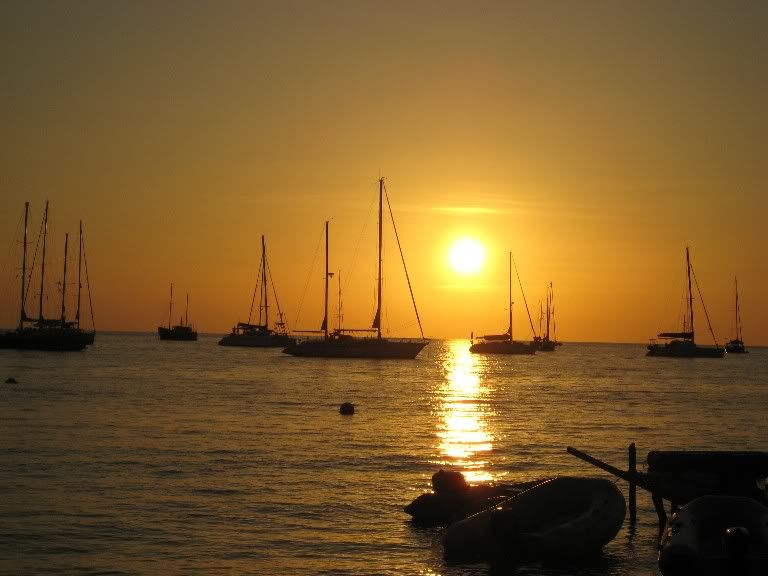
 [/caption]
 [/caption]
 [/caption]
 [/caption]